

Short essays exploring how training, recovery, and performance behave under real-world constraints.
The focus is not what to do, but how to think — especially when progress is inconsistent, recovery is variable, and simple plans are no longer enough.
Each piece is designed to improve decision-making under complexity, not provide fixed programs.
Start with the problem that sounds most like you.
-
![A lucky start zone painted on green artificial turf with white lines and the word 'START' in large white letters.]()
Build Capacity
When your body can’t tolerate load, everything breaks down — from training to daily life. These insights show how to rebuild strength and resilience so you can move, train, and progress without constant setbacks.
-
![A woman performing a plank or push-up on parallel bars outdoors during sunset, silhouetted against the sky.]()
Get Your Energy Back
If your energy is inconsistent, everything else becomes harder — from training to daily life. These insights focus on restoring energy and recovery so you can perform without constantly running on empty.
-
![A man practicing yoga outdoors on a purple mat, in a lunge position, with eyes closed, surrounded by green plants and trees, during daylight.]()
Stabilise Your System
If your training swings between good weeks and setbacks, the issue isn’t discipline — it’s instability. These insights show how to regulate your system so consistency holds, even when life isn’t perfect.
-
![A man in a gym is preparing to lift a barbell, squatting down with a focused posture, on a black rubber floor with chalked markings.]()
Train Without Breaking Yourself
Knowing what to do isn’t the problem — knowing how much, when, and how often is. This is where training becomes adaptable, so you can progress without tipping into overload or setbacks.
-
![A shirtless man with gray hair and athletic build doing a push-up on a paved outdoor area on a sunny day.]()
Long-Term Performance
Training shouldn’t just work now — it should keep working in 5, 10, 20 years. These insights focus on building a body that stays capable, resilient, and reliable over time.



The Difference Between Being Fit and Being Physically Capable
Fitness measures particular qualities. Physical capability is the ability to use strength, movement, fitness and judgement together when real life becomes less predictable.

What Happens at an Assessment — And Why It’s the Starting Point for Everything
An assessment is not a pass-or-fail test. It establishes what your body can currently do, what is limiting progress and what should be built next.

What HRV Actually Tells You — And What It Doesn’t
HRV can add useful context to recovery and readiness, but one score cannot tell you how to train. Trends become useful when combined with sleep, energy and performance.
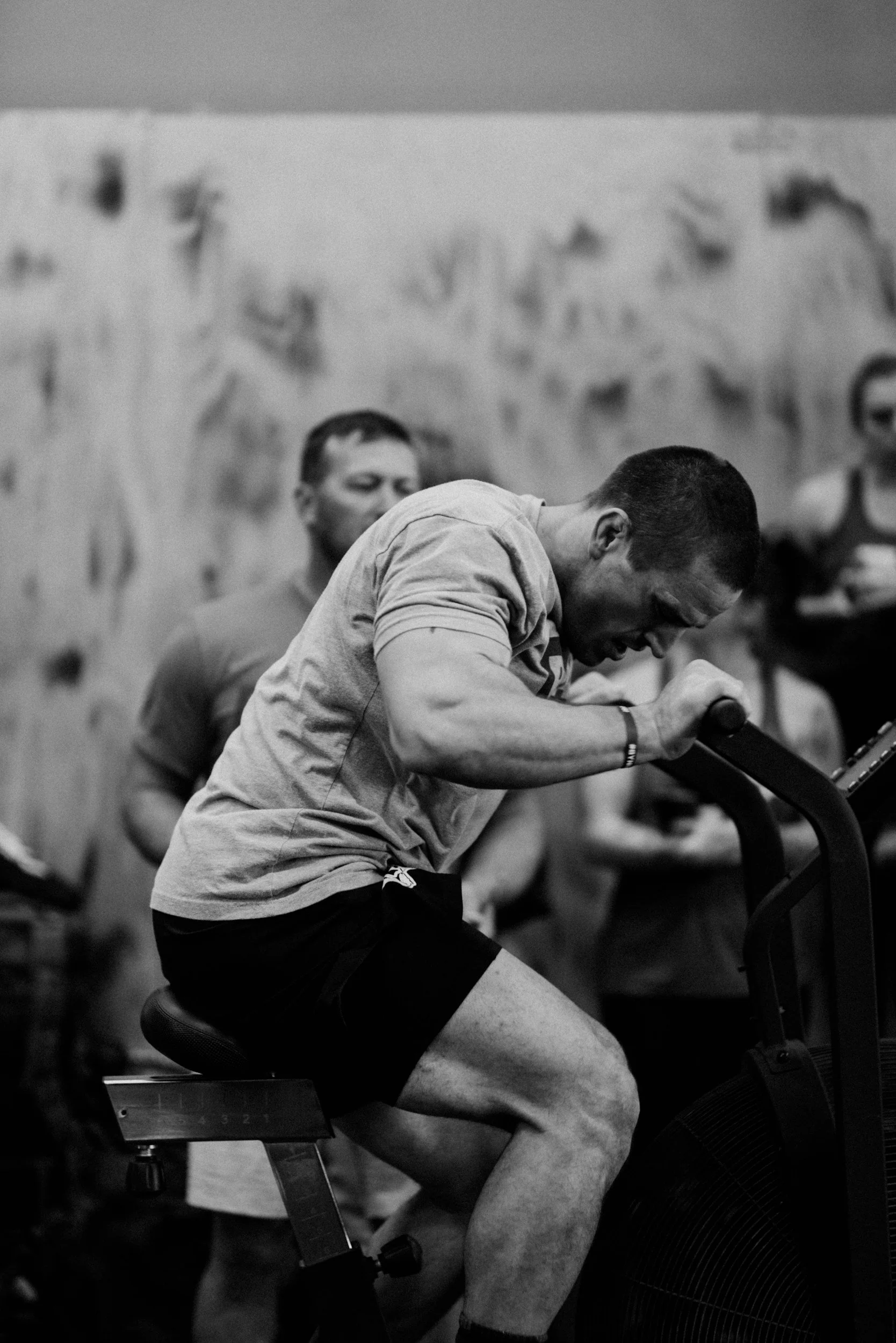
Can You Still Push Hard — Or Is That What’s Breaking You?
Most clients I work with have a competitive history — and the training approach that built them doesn’t disappear when the competitive career ends. It worked at twenty-five. It works less well at forty-five. Here’s what changes, and what a sustainable version of pushing hard actually looks like.
Why Progress Stalls When You Keep Training the Wrong Problem
There’s a specific frustration that brings people to me — not from never trying, but from trying consistently and still not getting the return the effort should produce. In my experience, this pattern almost always has a structural explanation, not a motivational one. Here’s what’s usually getting in the way, and why fixing it in the right order matters more than fixing it fast.

Why Your Joints Hurt — And What’s Actually Worth Doing About It
Joint pain isn’t random — it’s predictable. This post breaks down the 3 most common causes of joint issues we see in high-performing adults, plus exactly what to do to stay strong, mobile, and pain-free for the long haul.